
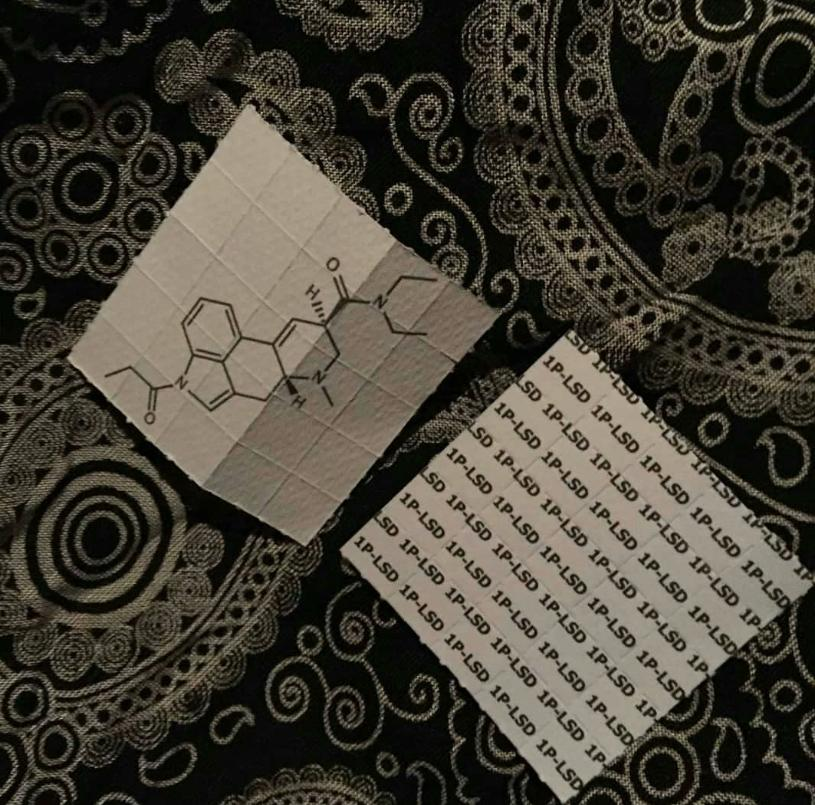
What is 1P-LSD, 1-propionyl-LSD
1P-LSD, also known as 1-propionyl-LSD, is a psychedelic drug of the lysergamide family related to LSD. It is an amide derivative of LSD and a homologue of ALD-52 (1A-LSD).
The drug originated in 2015 when it appeared as a designer drug sold online. It was first synthesized as a legal LSD alternative by Lizard Labs, a Netherlands based research chemical laboratory.
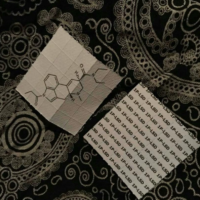
It modifies the LSD molecule by adding a propionyl group to the nitrogen atom of LSD’s indole group and is a prodrug of LSD.
The dose range of 1P-LSD is 100 to 200 μg, with a typical dose estimate of 150 μg. Its duration is about 8 to 12 hours for most people.
The subjective effects of 1P-LSD are not well-defined in the literature, although they are generally thought to be comparable to those of LSD.
In a 2020 study, the qualitative effects of 1P-LSD and LSD were similar when measured using visual analog scales.
The properties of 1P-LSD have also been assessed in other studies.
Like ALD-52 (1A-LSD), 1P-LSD is believed to act as a prodrug for LSD via hydrolysis of the propionyl group.
When 1P-LSD is incubated in human serum or liver cells, administered intravenously to rats, or administered either orally or intravenously to human subjects, high levels of LSD and relatively low levels of 1P-LSD are quickly detected, demonstrating that 1P-LSD is rapidly hydrolyzed into LSD in vivo following ingestion.
Indeed, following intravenous administration in humans 1P-LSD is detectable in serum for no longer than 4 hours, after which it is completely converted to LSD.
These findings are supported by the similar duration and behavioral effects of 1P-LSD and LSD in both animal and human experiments.
Reviews
There are no reviews yet.