
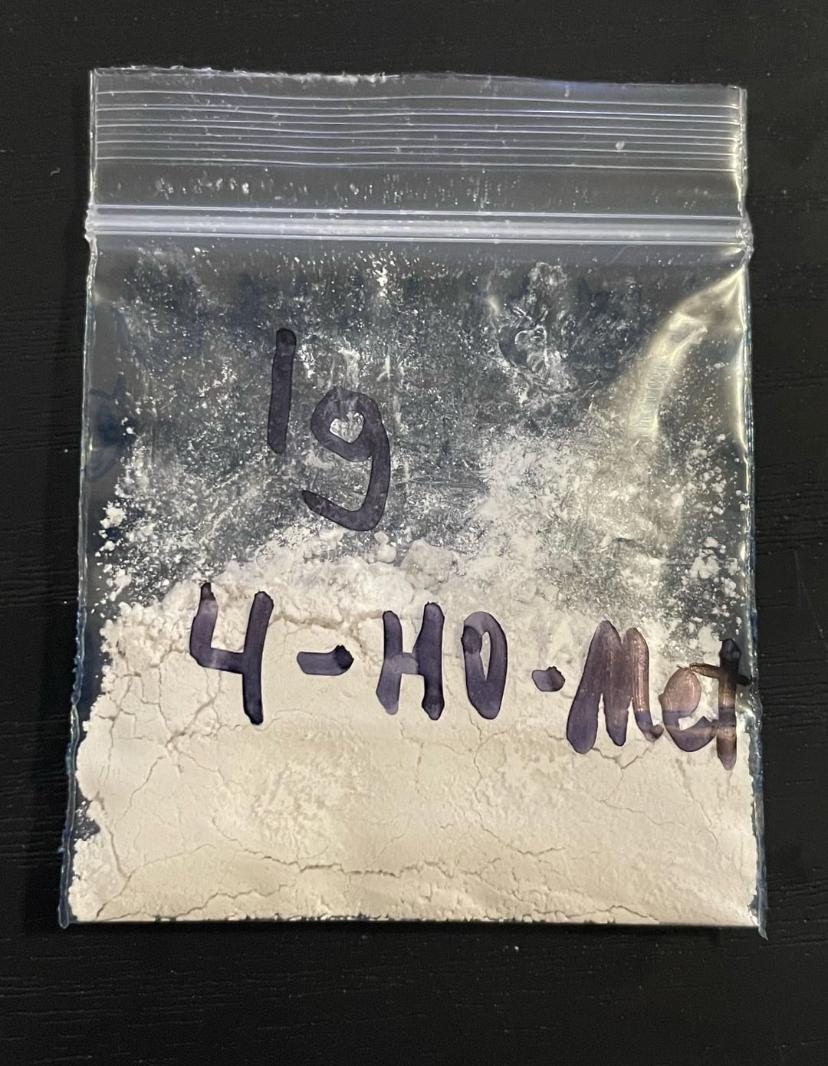
What is 4-HO-MET, 4-hydroxy-N-methyl-N-ethyltryptamine
4-HO-MET, also known as 4-hydroxy-N-methyl-N-ethyltryptamine, as well as metocin or methylcybin, is a psychedelic drug of the tryptamine and 4-hydroxytryptamine families related to psilocin (4-HO-DMT). It is taken orally.
The drug acts as a non-selective serotonin receptor agonist, including of the serotonin 5-HT2A receptor. It is a close structural analogue of psilocin (4-HO-DMT) and is the 4-hydroxyl analogue of methylethyltryptamine (MET).
4-HO-MET was discovered by Alexander Shulgin in the 1970s. It was first described in the literature by David Repke and colleagues in 1981. The drug was encountered as a novel recreational and designer drug by 2008.
4-HO-MET is said to produce qualitative effects very similar to those of psilocin. Shulgin has stated that he doubts it could be distinguished from psilocin in any blinded clinical study.
However, the drug has also been described as being relatively or very light, more clear-headed and functional, and having less head space.
On the other hand, it is said to still produce strong psychedelic visuals. This profile of effects has been described as being analogous to the case of 2C-B.
In addition to its use on its own, 4-HO-MET, along with the related tryptamine psychedelic 5-MeO-MiPT, is employed at low doses as a component of the MDMA-mimicking Borax combo.
The effects of 4-HO-MET have been reported to include pupil dilation, euphoria, tingling sensations, perceptual changes, closed- and open-eye visuals, synesthesia, time dilation, intensified perceptions, thoughts, and feelings, and a general change in thought processes.
Other specific effects include alteration of color and form, feeling sounds, and a wave-like experience with alternation between near-normal perception one moment and a “swirl of altered concept” the next moment.
Reviews
There are no reviews yet.